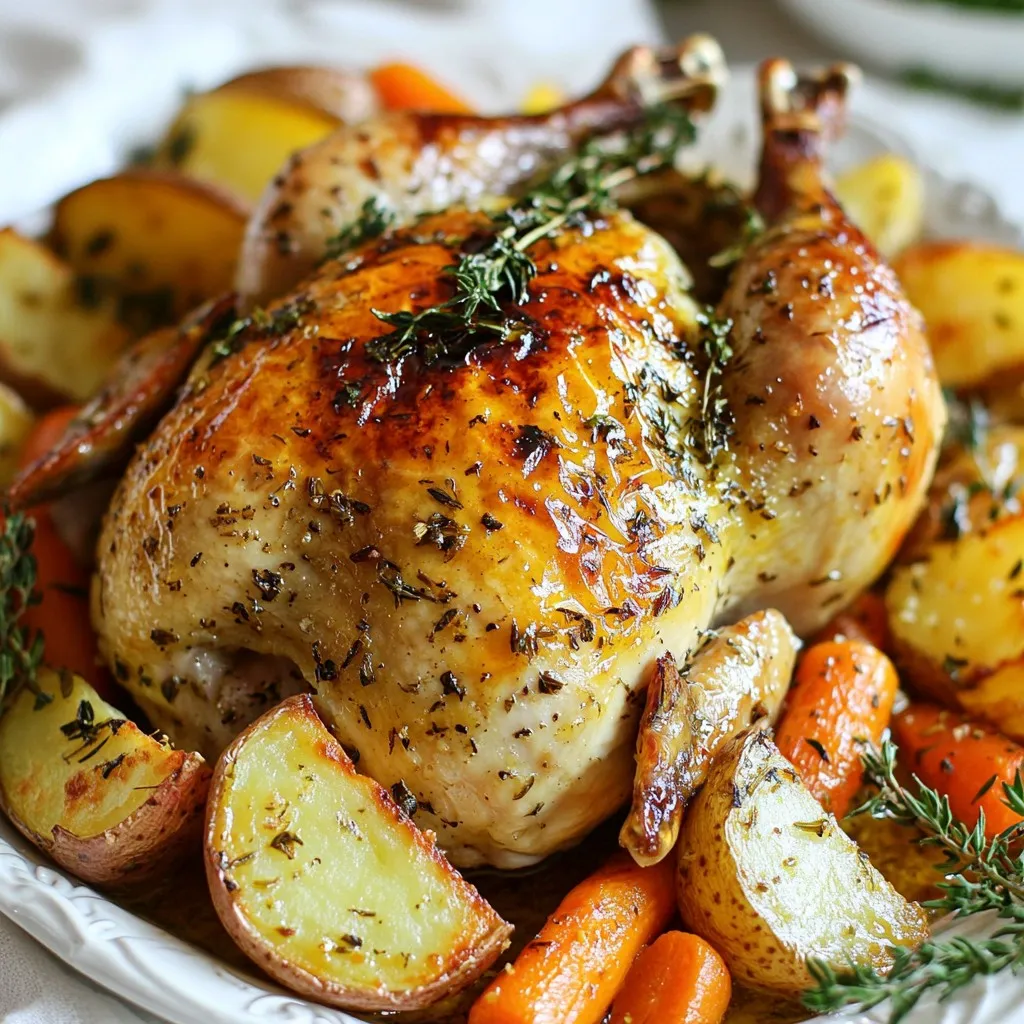
Are you ready to elevate your dinner game? Garlic Herb Butter Roasted Chicken is the answer! This juicy and flavorful dish will impress your family and friends. With just a few simple ingredients, you can create a meal bursting with taste. In this post, I’ll guide you through easy steps to make this mouthwatering chicken with crispy skin. Let’s get started on this delicious journey!
Why I Love This Recipe
- Flavorful Herb Butter: The combination of garlic, rosemary, thyme, and parsley creates a delicious herb butter that infuses the chicken with rich flavors.
- Juicy and Tender: Roasting the chicken at a high temperature keeps the meat juicy while the skin becomes perfectly crispy.
- Easy to Prepare: With just a few simple steps, this recipe is straightforward and accessible, making it perfect for both novice and experienced cooks.
- Versatile Side Vegetables: The roasted carrots and potatoes complement the chicken beautifully, creating a complete meal in one dish.
Ingredients
List of Ingredients
– Whole chicken (4-5 lbs)
– Unsalted butter (1/2 cup, softened)
– Garlic (6 cloves, minced)
– Fresh herbs (rosemary, thyme, parsley)
– Lemons (halved)
– Vegetables (onion, carrots, potatoes)
– Seasonings (salt and black pepper, olive oil)
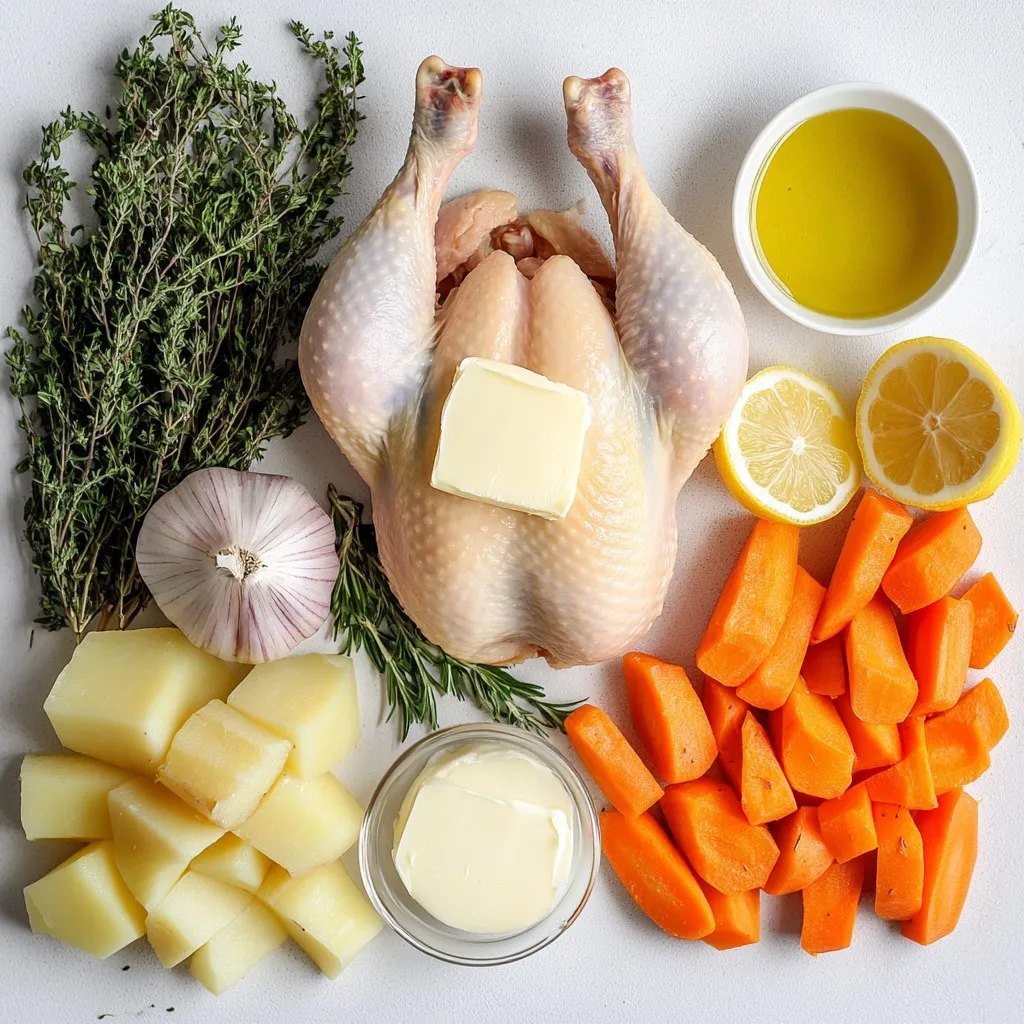
To make Garlic Herb Butter Roasted Chicken, gather these ingredients. Start with a whole chicken, around 4-5 pounds. This size cooks well, giving you juicy meat. Use unsalted butter, half a cup, left out to soften. This makes it easy to mix.
Next, you need six cloves of garlic. Mince them finely to release their strong flavor. Fresh herbs are key. Use rosemary, thyme, and parsley for a fresh taste. You’ll need two tablespoons of rosemary, two tablespoons of thyme, and one tablespoon of parsley.
Lemons add brightness. Halve one lemon and set it aside. For the veggies, use one quartered onion, four thick chunks of carrots, and three potato wedges. These veggies roast nicely with the chicken.
Finally, season with salt and black pepper. Drizzle some olive oil over the veggies to enhance their flavor. Each ingredient plays a role in making the chicken taste great. The herbs and garlic give deep flavor, while the lemon keeps it fresh. Enjoy the cooking process!
Step-by-Step Instructions
Preparation Steps
1. Preheat the oven to 425°F (220°C). This helps cook the chicken evenly.
2. In a bowl, mix the softened butter, minced garlic, rosemary, thyme, parsley, salt, and pepper. Stir until smooth.
3. Pat the chicken dry with paper towels. This makes the skin crispy. Place the chicken breast-side up in a roasting pan. Lift the skin gently over the breast and thighs.
Applying the Seasoning
1. Spread half of the herb butter mixture under the skin. This adds deep flavor.
2. Rub the rest of the herb butter all over the chicken’s surface. Coat every spot for rich taste.
3. Squeeze juice from one lemon half inside the chicken cavity. Place both lemon halves and the quartered onion inside. This adds moisture and flavor. Surround the chicken with carrots and potato wedges in the roasting pan. Drizzle olive oil over the veggies and season with salt and pepper.
Roasting the Chicken
1. Roast the chicken in the oven for about 1 hour and 15 minutes. Check that the internal temperature reaches 165°F (75°C) in the thigh.
2. Halfway through, baste the chicken with its juices. This keeps it moist and tasty.
3. When it’s golden and cooked, remove the chicken. Let it rest for 10-15 minutes before carving. This helps the juices settle for a tender bite.
Tips & Tricks
Perfecting the Roast
– How to achieve crispy skin: Start by drying the chicken well with paper towels. This step helps crisp the skin. Use a high oven temperature, like 425°F, to create a nice golden crust. Basting the chicken halfway through with its own juices adds flavor and moisture.
– Importance of letting the chicken rest: Resting the chicken is key to juicy meat. After roasting, let it sit for 10-15 minutes. This time allows the juices to settle, giving you tender, flavorful bites.
Enhancing Flavor
– Using dry white wine in the pan: Pour a splash of dry white wine in the pan. This adds depth to the flavor and creates a tasty base for the drippings. The wine also helps keep the chicken moist as it cooks.
– Alternate herb combinations: You can mix and match herbs. Try using sage or oregano for a different taste. Fresh herbs bring brightness, while dried herbs can add a robust flavor.
Cooking Tips
– Using a meat thermometer: A meat thermometer is your best friend. Insert it into the thickest part of the thigh. The chicken is done when it reads 165°F. This step ensures you avoid undercooked or dry meat.
– Adjusting cooking time for different sizes of chicken: Cooking time varies with size. A larger chicken may need more time, while smaller ones cook faster. Keep an eye on the thermometer for perfect results.
Pro Tips
- Pat the Chicken Dry: Thoroughly drying the chicken with paper towels before seasoning helps achieve a crispy skin during roasting.
- Use Fresh Herbs: Fresh herbs enhance the flavor significantly compared to dried ones, so opt for fresh rosemary, thyme, and parsley for the best results.
- Baste for Moisture: Basting the chicken with its own juices halfway through the cooking time will keep it moist and flavorful.
- Let it Rest: Allowing the chicken to rest for 10-15 minutes after roasting allows the juices to redistribute, ensuring a tender and juicy bite.
Variations
Flavor Variations
You can change the taste of your garlic herb butter roasted chicken with just a few tweaks.
– Lemon herb version: Add more lemon zest to the butter. This will give a fresh, bright flavor. You can also sprinkle lemon juice over the chicken before roasting. The citrus will keep the meat juicy and add a nice zing.
– Spicy garlic butter version: Mix in red pepper flakes with the herb butter. This will give your chicken a warm kick. You can also add some smoked paprika for a deeper flavor. This version pairs well with roasted vegetables.
Dietary Considerations
If you have special dietary needs, you can still enjoy this dish.
– Gluten-free modifications: This recipe is naturally gluten-free. All the ingredients are safe for those who avoid gluten. Just ensure that any added ingredients, like broth or sauces, are gluten-free.
– Low-calorie alternatives: To cut calories, you can use less butter. Try replacing half the butter with a mix of olive oil and lemon juice. This keeps the flavor but makes it lighter.
Serving Suggestions
Pair your roasted chicken with the right sides for a full meal.
– Best side dishes to pair: Roasted vegetables like carrots and potatoes are perfect. You can also serve a fresh salad or some steamed green beans for balance.
– Creating a complete meal experience: To make this a special meal, add some crusty bread and a nice wine. A light white wine complements the flavors well. Finish with a simple dessert like fruit or sorbet for a lovely end to your dinner.
Storage Info
Leftover Storage
To keep your leftover garlic herb butter roasted chicken fresh, follow these tips:
– Allow the chicken to cool down at room temperature for about 30 minutes.
– Wrap the chicken tightly in plastic wrap or foil.
– Place the wrapped chicken in an airtight container.
– Store it in the fridge.
Leftovers can last up to four days. If you want to keep them longer, consider freezing them. Just make sure to use a freezer-safe bag or container.
Reheating Instructions
When reheating, you have two main choices: the oven or the microwave.
– Oven Method: Preheat your oven to 350°F (175°C). Place the chicken in a baking dish and cover it with foil. Heat for about 20-30 minutes, or until warmed through. This method keeps the skin crispy and the meat juicy.
– Microwave Method: Place the chicken on a microwave-safe plate. Cover it with a microwave-safe lid or paper towel. Heat in short bursts of 1-2 minutes. This method is quicker, but it may dry out the meat.
To maintain moisture and flavor, add a splash of broth or water before reheating.
FAQs
Common Questions About Garlic Herb Butter Roasted Chicken
What is the best way to ensure the chicken is juicy?
The best way to keep your chicken juicy is to use a meat thermometer. Check the thickest part of the thigh for a temperature of 165°F (75°C). Also, let it rest before slicing. This helps the juices spread throughout the meat.
Can I use frozen chicken for this recipe?
It is not best to cook frozen chicken directly. It is safer and better to thaw it first in the fridge. Thawing helps the chicken cook evenly, keeping it juicy and full of flavor.
What can I substitute for fresh herbs?
If you don’t have fresh herbs, you can use dried herbs. Use one-third of the amount if they are dried. For example, use 1 tablespoon of dried herbs instead of 3 tablespoons of fresh. Herbs like Italian seasoning can work well too.
How do I know when the chicken is fully cooked?
Use a meat thermometer to check for doneness. Insert it in the thickest part of the thigh. The chicken is done when it reaches 165°F (75°C). If you don’t have a thermometer, the juices should run clear when you slice into the meat.
This blog post covered the key steps to make a delicious garlic herb butter roasted chicken. You learned about the necessary ingredients, the step-by-step cooking process, and important tips for perfecting the roast. We also explored flavorful variations and how to store and reheat leftovers effectively.
By following these guidelines, you can create a tasty meal that your family will love. Enjoy the cooking process, and trust that with practice, you’ll master this dis