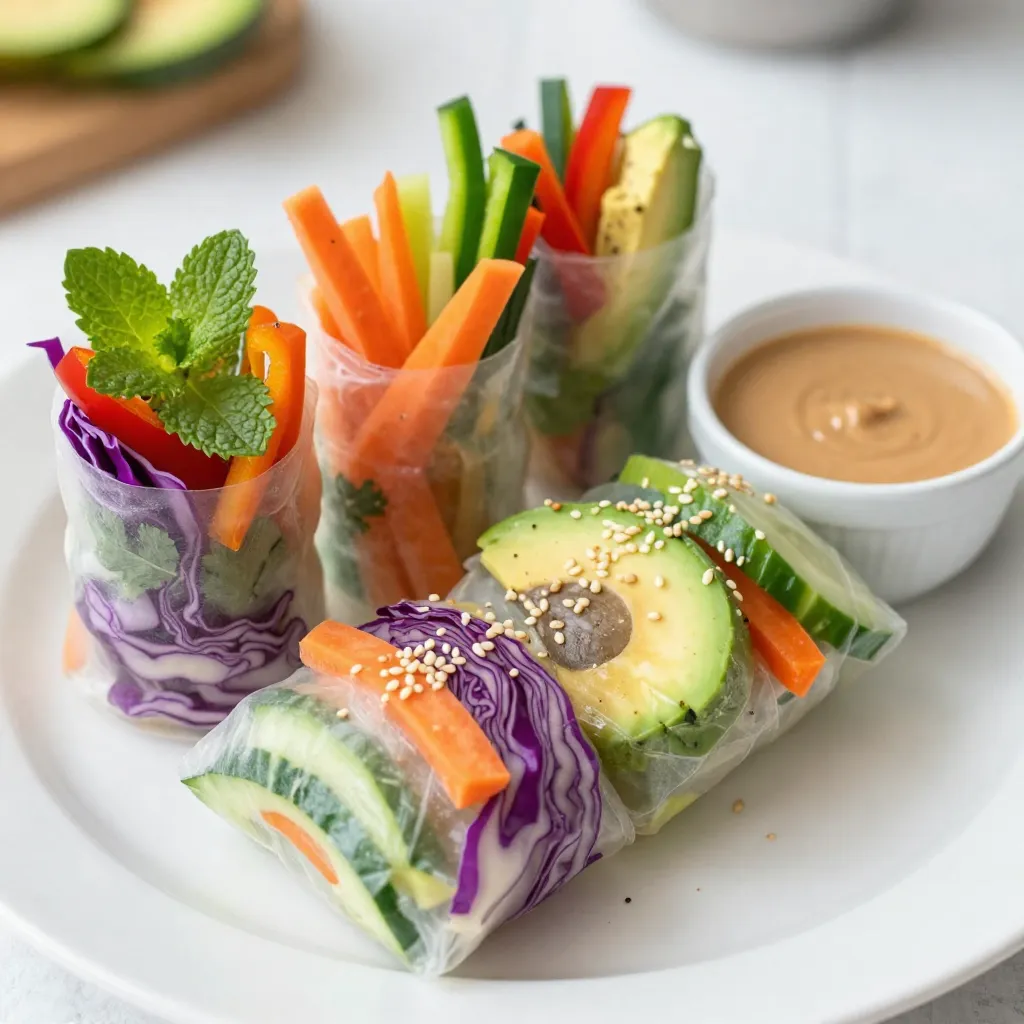
Are you ready to create a dish that’s as fun to make as it is to eat? Rainbow Veggie Spring Rolls are packed with color, texture, and nutrients. Picture vibrant red cabbage, crunchy carrots, and creamy avocado wrapped in rice paper. Pair them with a creamy peanut dipping sauce for a treat that dazzles. Join me as we explore how to master this fresh and flavorful delight that’s perfect for any occasion!
Why I Love This Recipe
- Fresh and Colorful: These spring rolls are a feast for the eyes, showcasing an array of vibrant vegetables that appeal to both kids and adults.
- Healthy and Nutritious: Packed with fresh veggies, these rolls are not only low in calories but also rich in vitamins and minerals.
- Customizable: You can easily swap in your favorite vegetables or add proteins like shrimp or tofu for a heartier option.
- Easy to Make: With simple ingredients and straightforward instructions, these spring rolls are perfect for any culinary skill level.
Ingredients
Main Ingredients for Spring Rolls
– 1 pack of rice paper wrappers
– 1 cup red cabbage, finely sliced
– 1 cup carrots, cut into thin julienne strips
– 1 cup assorted bell peppers (red, yellow, and green), thinly sliced
– 1 cup cucumber, cut into julienne strips
– 1 ripe avocado, sliced
– 1 cup fresh mint leaves
– 1 cup fresh cilantro leaves
– 1/4 cup sesame seeds (for garnish)
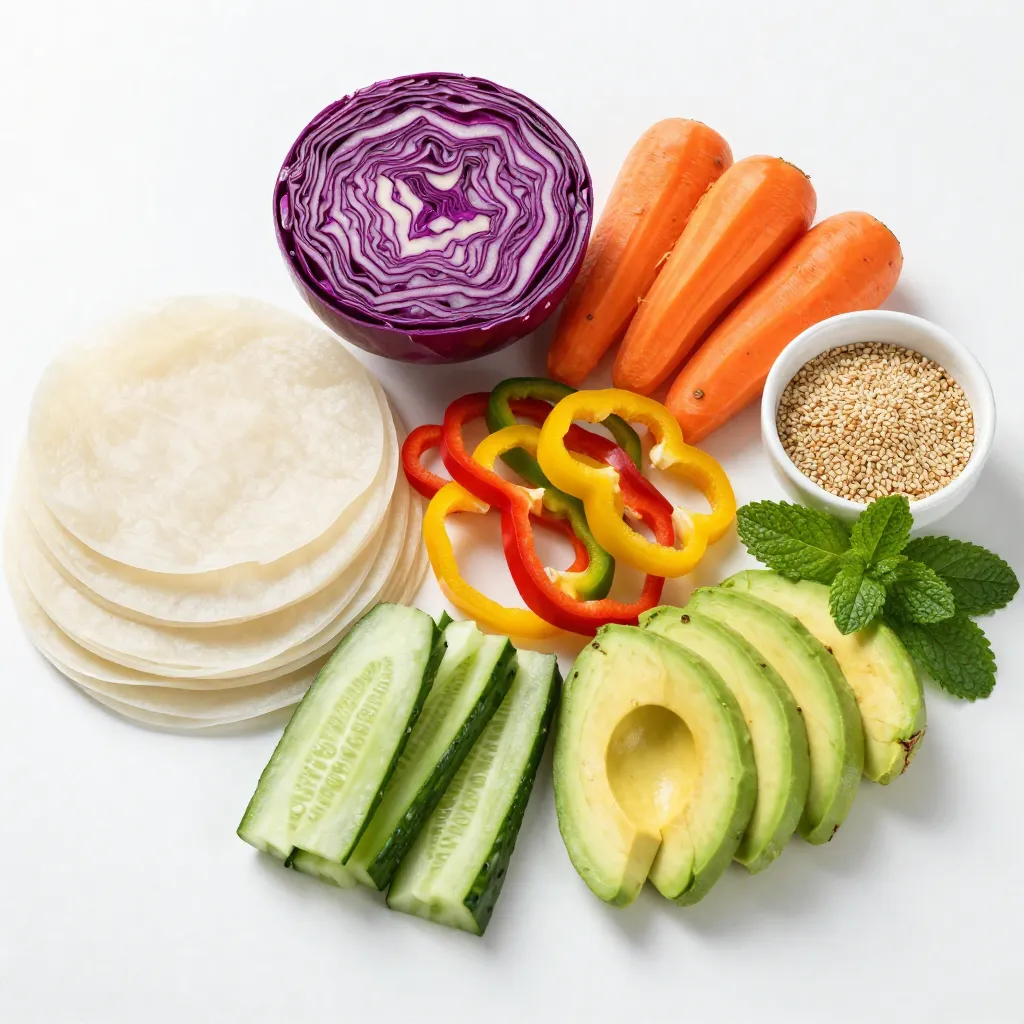
Rice paper wrappers are the base for these spring rolls. They are thin and soften quickly in water. Fresh vegetables make the rolls colorful and tasty. I love using red cabbage for its crunch and vibrant color. Carrots bring sweetness, while bell peppers add a nice crunch. Cucumber provides a refreshing bite. Avocado gives a creamy texture that balances the other flavors. Fresh herbs like mint and cilantro add a burst of fresh taste. Finally, sesame seeds add a lovely crunch on top.
Dipping Sauce Ingredients
– 1/4 cup creamy peanut butter
– 2 tablespoons soy sauce (or tamari for a gluten-free option)
– 2 tablespoons freshly squeezed lime juice
– 1 tablespoon honey or agave syrup
– Water (to thin out the sauce)
For the dipping sauce, I use creamy peanut butter as a rich base. Soy sauce or tamari adds a salty kick. Fresh lime juice gives a zesty note. Honey or agave syrup adds a touch of sweetness to balance the flavors. You can thin the sauce with water to get the right texture. This sauce pairs perfectly with the fresh spring rolls.
Step-by-Step Instructions
Preparing the Vegetables
Start by washing all your veggies. Use cool water to keep them fresh. For slicing, take your time. Thin strips work best for spring rolls. Use a sharp knife for clean cuts. Slice the red cabbage into thin strips. Julienne the carrots into small sticks. Slice the bell peppers and cucumber thinly. Cut the avocado into even slices. Place each veggie in separate bowls. This makes it easy to grab what you need.
Soften the Rice Paper
To soften the rice paper, use warm water. In a large bowl, fill it with water. Soak one wrapper for about 10 to 15 seconds. You want it soft but not mushy. Lift it carefully and lay it flat. A clean, dry surface works best for this step.
Assembling the Spring Rolls
Start assembling on the lower third of the rice paper. First, add a handful of red cabbage. Next, place a few sticks of carrot. Then, add slices of bell pepper and cucumber. Put a slice of avocado on top. Finally, add mint and cilantro leaves for flavor. Layering this way gives a nice mix of taste in every bite.
Rolling Techniques
When rolling, be gentle to avoid tearing. Fold the sides over the filling first. Start from the bottom and roll it up. Tuck the filling in as you go. Don’t roll too tightly; this helps prevent tears. Once rolled, it should stay closed. Repeat this for the remaining wrappers and fillings.
Making the Dipping Sauce
To make the dipping sauce, grab a small bowl. Mix together peanut butter, soy sauce, lime juice, and honey. Use a whisk to blend until smooth. If it’s too thick, add a bit of water. Whisk again until the sauce is creamy and easy to dip into.
Serving Suggestions
For serving, arrange the spring rolls on a platter. Sprinkle sesame seeds on top for extra crunch. Serve the dipping sauce in a small bowl on the side. This makes for a pretty presentation. You can also garnish with extra herbs for color. Enjoy these spring rolls as a fresh snack or light meal!
Tips & Tricks
Mastering the Rolling Technique
To roll your spring rolls well, avoid common mistakes. The rice paper can rip if you roll too tightly. If you overfill, it’s hard to roll them. Take your time and use small amounts of filling.
I recommend practicing with a damp cloth. This helps you learn how to roll without tearing. You can also watch videos online to see the technique in action.
Best Vegetables to Use
Use seasonal vegetables for the best taste. Fresh bell peppers, cucumbers, and carrots really shine in spring rolls. You can also add radishes or snap peas for extra crunch.
If you have allergies, swap out any item. Try cooked chicken, tofu, or even fruits like mango. These choices keep your rolls tasty and safe.
Making Ahead
To prep in advance, wash and slice your veggies a day before. Store them in airtight containers in the fridge. This keeps them fresh and ready to use.
When you make the spring rolls, keep them covered with a damp cloth. This prevents them from drying out. You can also store extra rolls in a container lined with parchment paper.
Pro Tips
- Fresh Ingredients Matter: Use the freshest vegetables and herbs you can find for the best flavor and crunch in your spring rolls.
- Water Temperature: Ensure the water for softening the rice paper is warm, not hot, to prevent tearing while rolling.
- Customizable Fillings: Feel free to switch up the fillings based on seasonal vegetables or personal preferences for a unique twist each time.
- Serving Suggestions: Pair these spring rolls with a variety of dipping sauces, such as sweet chili sauce or hoisin, to enhance the flavors.
Variations
Protein Additions
You can add protein to your rainbow veggie spring rolls for more flavor and fullness. Tofu is a great option. It absorbs flavors well. Firm tofu holds its shape nicely. Just cube it and marinate it if you wish.
Shrimp is another tasty choice. Cook the shrimp briefly before adding it to the rolls. The sweetness of shrimp pairs well with the fresh veggies and herbs. You can even mix proteins! Try adding both tofu and shrimp for a delightful twist.
Flavor Enhancements
Spices and sauces can elevate your spring rolls. Try adding a sprinkle of chili flakes for some heat. A dash of garlic powder can also enhance the flavor.
For a unique twist, consider using hoisin sauce instead of peanut sauce. This sweet and savory sauce gives a different taste. You can also add fresh ginger to the dipping sauce for a refreshing kick. Experiment with flavors to make each roll unique!
Dietary Adjustments
You can modify this recipe for different diets. To make it gluten-free, simply swap soy sauce for tamari. It tastes just as good and keeps the flavor intact.
If you prefer vegan options, use agave syrup instead of honey. For those on low-carb diets, consider omitting the rice paper. Instead, wrap the veggies in large lettuce leaves. This keeps it fresh and crunchy while cutting down on carbs!
Storage Info
How to Store Spring Rolls
To keep your spring rolls fresh, store them in an airtight container. Use parchment paper between layers to prevent sticking. This helps maintain their crunch. Keep them in the fridge for up to three days. Avoid stacking them too tightly, as this may cause them to tear.
Storing Dipping Sauce
If you have leftover dipping sauce, store it in a sealed jar. The sauce lasts in the fridge for about one week. When you want to use it again, just stir it well. You may need to add a little water to thin it out.
Freezing Spring Rolls
You can freeze spring rolls for later. First, wrap each roll in plastic wrap. Place the wrapped rolls in a freezer-safe bag. They can stay in the freezer for up to three months. To reheat, let them thaw in the fridge overnight. Then, warm them in a dry pan for a few minutes. Expect them to lose some crunch, but they will still taste great!
FAQs
How long do rainbow veggie spring rolls stay fresh?
Rainbow veggie spring rolls stay fresh for about 2 days in the fridge. Store them in an airtight container. To keep them from sticking, place parchment paper between the rolls. Do not freeze them, as the rice paper can become tough.
Can I use different wrappers for spring rolls?
Yes, you can use different wrappers for spring rolls. Some options include rice paper, wheat tortillas, or even lettuce leaves. Each wrapper gives a unique taste and texture. Rice paper is the most common choice, but feel free to experiment.
What can I dip my spring rolls in besides peanut sauce?
You can dip your spring rolls in many sauces. Here are a few tasty options:
– Sweet chili sauce
– Soy sauce
– Hoisin sauce
– Spicy sriracha
– Coconut aminos for a soy-free choice
Are spring rolls healthy?
Yes, spring rolls are a healthy choice. They are packed with fresh vegetables like red cabbage, carrots, and bell peppers. These veggies provide vitamins and minerals. The rice paper is low in calories too. Adding avocado gives healthy fats, making them a balanced snack.
Can I make spring rolls ahead of time?
You can make spring rolls ahead of time. Prepare them up to 4 hours before serving. Keep them in the fridge in an airtight container. If you make the filling in advance, store it separate from the rice paper to keep everything fresh.
This guide covers making fresh and flavorful spring rolls. You learned how to select the best ingredients, prepare vegetables, and create delicious dipping sauces. We explored tips to perfect your rolling technique and storage methods to keep your rolls fresh. Remember, spring rolls are versatile. You can adjust them to fit your tastes and dietary needs. Have fun experimenting with flavors and making your own unique rolls! Enjoy every bite as you share this delicious dish with friends and famil